Homework Notebook in French: A Complete Year-Round Organizer for Young Learners
When you are helping a child build consistent homework habits, the right tool can make all the difference. A dedicated notebook that is both engaging and structured turns the daily task of recording assignments into a smooth, predictable routine. The Homework Notebook in French we are discussing here is a PDF/SVG file designed as a 6x9 inch diary with a unicorn-panda theme. It is aimed at girls aged 5–11, and it offers a unique blend of visual appeal and practical organization. Whether you are a parent, tutor, or small business owner selling educational printables, understanding how this notebook fits into a broader learning workflow helps you use it effectively.
This article walks through what this notebook contains, how it can be incorporated into a child’s school year, and how to get the most out of its features. The focus is on process, implementation, and long-term consistency. No fluff – just how to make this resource work for you and the young learner you support.
What Makes This Homework Notebook Unique
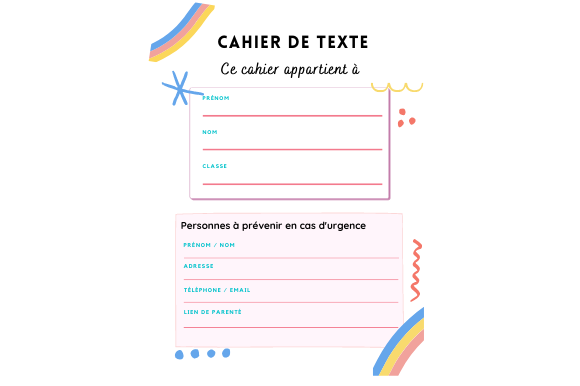
The notebook is built around five days of the week, each with its own color. This color-coding is more than decoration – it helps a child quickly identify Monday through Friday at a glance. For each day, there are three clear columns: Matière (Subject), Pour le (Date due), and Devoirs (Homework). This layout mirrors what many teachers expect from a homework diary, so transitions between school and home are seamless.
At 6x9 inches (14.24 x 22.86 cm), the notebook is a convenient size for a child’s backpack. It is neither too bulky nor too small. The 90-page count is deliberately chosen to cover a full school year without running out of space. Because it is a PDF and SVG file, you can print as many copies as needed, adjust colors in the SVG if you prefer a different palette, or even use it digitally on a tablet with a note-taking app.
The appendices are what elevate this notebook beyond a simple assignment tracker. They include:
- Multiplication tables up to 12
- Mathematics exercises
- Writing and reading practice prompts
- Time-telling exercises
- Basic English vocabulary and exercises
These extras turn the notebook into a portable reference and quick-practice tool. During homework time, a child can flip to the back to review multiplication facts or check the time chart without needing another book. For parents and educators, this means less time hunting for resources and more focused learning.
Where It Fits in the Broader Learning Workflow
Every school year follows a cycle of planning, execution, review, and reinforcement. The Homework Notebook in French sits at the center of the daily execution phase. Its primary role is to capture assignments before they are forgotten and to provide a predictable structure for after-school work. But its value extends beyond the daily grind.
During the planning phase (back-to-school or January re-entry):
You can print the notebook, add the child’s name, and discuss how the color-coded days will work. Show them the appendices and explain that these sections are there for quick help, not extra work. Setting expectations early reduces resistance.
During the execution phase (daily homework):
The child writes down assignments from the board or planner. At home, they open the notebook, see what is due, and start working. The appendix can serve as a warm-up: a quick set of multiplication problems or a time-reading exercise takes five minutes and builds confidence before tackling harder tasks.
During the review and reinforcement phase (weekly or monthly):
A parent or tutor can scan the completed pages to spot patterns – perhaps the child is consistently missing math homework on Wednesday, or writing assignments are always left until Sunday. The consistent format makes it easy to identify areas needing extra attention. The appendices also allow for targeted practice without a separate workbook. If the child struggles with telling time, you can revisit those appendix pages over several weeks.
The notebook interacts well with other tools: it can hold a daily reading log if you add a sticky note, or it can be paired with an online homework calendar for backup. But its strength is that it remains a low-tech, always-available anchor. No app requires charging or internet access.
Before the First Week of School
Print the notebook on good-quality paper. Because it is a PDF/SVG file, you have control over the output. Use a heavier paper (100 gsm or more) so marker or pen does not bleed through. The SVG format allows you to modify the colors if the child prefers a different unicorn-panda scheme – adjust the hex codes in editing software like Inkscape or Adobe Illustrator.
Spiral bind or staple the pages to make a booklet. A 6x9 size fits well into many ready-made spiral binding systems. If you plan to use the notebook digitally, upload it to a note-taking app like GoodNotes or Notability. The SVG layers can be adjusted for a digital workflow – for example, adding text boxes that can be typed into.
Setting the Daily Routine
Agree on a consistent time to use the notebook. Right after school, the child writes down each assignment under the correct day. If the teacher posts homework online, the child can transfer it into the notebook. This act of writing reinforces memory and gives a sense of ownership.
After completing an assignment, the child checks it off with a sticker or a highlighter in the corresponding column. The color-coded days make it easy to say: “Let’s look at the green page for Thursday.” Over time, this visual cue becomes a habit.
Leveraging the Appendices
Do not treat the appendices as a one-time resource. Integrate them into the weekly rhythm. For example:
- Monday: Review the multiplication table for the current week’s math focus. Use the exercise section to do three quick problems.
- Tuesday: Practice writing a short sentence in English from the appendix.
- Wednesday: Do the time-telling exercise for 5 minutes.
- Thursday: Read a short passage from the reading section aloud.
- Friday: Complete a writing prompt from the appendix.
This keeps the supplementary material in regular use, reinforcing skills without creating additional workload. The exercises are short enough to fit into the homework slot without overwhelming the child.
Who Benefits Most from This Notebook
While the unicorn-panda theme is clearly targeted at girls aged 5–11, the notebook’s functionality works for any elementary student who reads French. The appendices are designed for that age range, covering foundational skills. A parent who is not a native French speaker can still use it as a tool to learn alongside the child – the English section can be a bridge.
For educators and tutors, this notebook can be a standard issue for each student. It brings uniformity to homework tracking and provides built-in practice material. Small business owners and creators selling digital printables will find this product fits an evergreen niche: back-to-school and re-entry periods (January and September) always drive demand, but parents buy organizational tools throughout the year when they see a gap in their child’s routine.
Quality Control and Long-Term Use
A notebook is only as good as the habit that surrounds it. The 90-page count is carefully calculated. With five days per week and a typical school year of 36–40 weeks, you might need around 40 spreads (80 pages) for the daily entries. The remaining pages cover the appendices and a few extra note pages. Because it is a PDF/SVG, you can reprint additional page inserts for subjects like English or math if the child finishes the exercises early. The evergreen design means the notebook does not display a year-specific calendar, so it works for any school year – just write in the dates.
To maintain consistency, keep the notebook in a fixed place in the child’s backpack. Use a clear sleeve or a pocket folder to protect the cover. Check in with the child weekly to ensure the columns are being filled properly – sometimes a child will skip the “Pour le” column, which breaks the routine. A gentle reminder and a quick example usually fix that.
Integrating with Digital and Physical Resources
Many parents and educators today combine print and digital tools. The Homework Notebook in French can be the physical counterpart to a digital task manager like Google Calendar or Trello. At the end of each week, the child can transfer long-term projects from the notebook into a digital calendar. This teaches time management across formats. For the tutor, having a physical notebook during sessions allows direct correction and note-taking without screen distractions.
If you are a creator selling this product, highlight the dual format: PDF for immediate print, SVG for customization. Customers appreciate the flexibility to change colors or add their own logo. In your workflow as a seller, prepare the file with clear instructions on printing and binding – this reduces support questions and builds trust.
Observations on the Evergreen Niche
Back-to-school seasons in September and January are obvious peaks, but homework organization is a year-round need. A child may start using the notebook in the middle of the school year after a chaotic fall semester. Parents look for fresh starts after any break. The unicorn-panda theme appeals to a specific aesthetic preference, but the underlying structure is universal. The appendices target core competencies that remain relevant throughout elementary school. This combination makes the notebook a repeat purchase item: parents buy for each child, each year, or recommend to friends.
For marketing, emphasize the built-in educational bonus. Most homework diaries are just blank grids – this one gives you 12 multiplication tables and skill exercises included. That saves a parent time and money. Also emphasize the clean, uncluttered layout. The color-per-day system is both fun and functional.
Final Thoughts on Implementation
To get the full value from this Homework Notebook in French, start before the school year or at a re-entry point. Print and assemble it with the child so they feel ownership. Establish the routine of opening it daily. Use the appendices not as an afterthought but as a regular part of homework warmup. Check the columns for completeness each week. Over time, the notebook becomes a reliable record of effort and progress, and the child gains independence in managing their schoolwork.
Whether you are a parent seeking structure, a tutor equipping students, or an entrepreneur creating printable products, this notebook offers a straightforward, visually engaging solution. Its 90 pages, color-coded days, and skill-building appendices cover a full year of school without extra fluff. Integrate it into your existing systems, and you will see how a simple paper tool can drive consistent work habits in young learners.