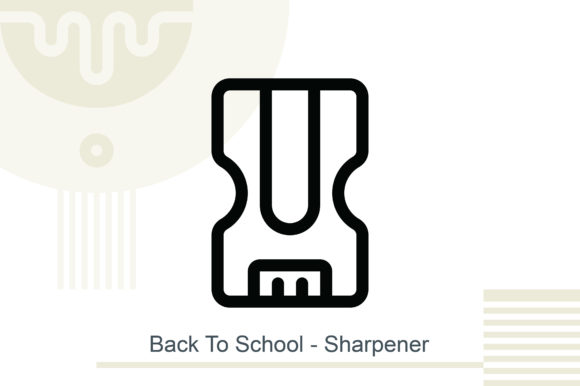
Back to School - Sharpener: When Vector Versatility Meets Practical Project Design
If you have spent any time sourcing graphics for classroom materials, event flyers, or organizational printables, you have likely noticed how quickly the wrong file format can slow a project down. The Back to School - Sharpener resource offers a distinct approach: it bundles a high-resolution JPEG preview with a fully editable EPS10 vector file, giving you both a quick visual reference and the flexibility to reshape the artwork as needed. Understanding what this combination actually delivers, and where it may fall short, can help you decide whether it fits your specific workflow.
What Back to School - Sharpener Actually Provides
At its core, this resource is a vector-based design asset built for printable projects. The EPS10 format means the artwork is composed of paths and curves rather than fixed pixels, so you can scale it to a poster, a sticker sheet, or a bookmark without losing clarity. The 300 DPI JPEG preview serves as an immediate reference: you can drop it into a draft layout, share it with a colleague, or use it for quick mockups without opening the vector file.
The set includes 100 fully resizable vector files, which gives you a range of options in one download rather than requiring you to source individual illustrations. For anyone planning a series of back-to-school materials, this collection can reduce the time spent searching for cohesive graphics across multiple libraries.
How This Differs from Raster-Only or Single-Format Options
Many downloadable design resources come in a single format, often a flattened PNG or JPEG. That is fine for one-off use, but it limits your ability to adjust colors, remove elements, or change sizes without quality loss. The Back to School - Sharpener resource avoids that bottleneck by giving you both formats. The JPEG preview handles quick visualization, and the EPS10 vector file handles customisation and scaling.
Another common alternative is a fully editable but unlinked file, such as an AI or CDR document that requires specific software. EPS10 is widely supported across vector editing programs, including Adobe Illustrator, CorelDRAW, Affinity Designer, and even some free tools like Inkscape. That broad compatibility makes it a practical middle ground: you do not need the latest subscription to open and edit the file, yet you still get full control over the artwork.
Strengths of the Vector and Preview Combination
The main advantage of this format pairing is workflow efficiency. Instead of exporting a preview from the vector file every time you need a quick look, the included JPEG lets you browse, sort, and present options quickly. This can be especially useful if you are collaborating with someone who does not use vector software: they can view the JPEG and give feedback without needing to open the EPS10 file at all.
The vector format itself shines in several practical areas:
- Scaling without degradation. You can enlarge a sharpener graphic to fit a bulletin board header or shrink it for a name tag without worrying about pixelation.
- Color and element editing. Changing a pencil from yellow to red, removing a background element, or combining multiple sharpeners into one layout is straightforward.
- Consistent output across media. Whether you print on a home inkjet, a commercial press, or a laser cutter, the vector file maintains crisp edges and uniform fills.
For a teacher preparing a classroom decoration set, a parent organising a school supply list, or a small business creating promotional materials, these capabilities reduce the need to redo work later.
When the JPEG Preview Matters Most
The 300 DPI JPEG included with the Back to School - Sharpener resource is more than a simple thumbnail. At that resolution, you can actually use the preview in low-stakes printed materials or screen presentations without opening the vector file. If you need a quick flyer for a school fair or a digital post for a classroom newsletter, the JPEG alone might be sufficient, saving you the step of exporting from the EPS10 file.
However, keep in mind that the JPEG is a flat representation. You cannot edit individual elements, change colors, or remove parts of the design in that format. So for any project that requires customisation, you will want to work directly with the EPS10 vector file.
Tradeoffs and Limitations to Consider
No single resource fits every scenario, and the Back to School - Sharpener collection has practical boundaries worth weighing.
Learning curve with vector software. Even though EPS10 is widely supported, it still requires a vector editing program to make changes. If you primarily use basic image editors or online design tools that only handle raster files, you may find the vector file inaccessible until you learn new software. In that case, the JPEG preview becomes your main usable asset, which limits the advantages of the vector format.
File management for 100 files. Having 100 separate vector files is a strength in terms of variety, but it also means you need a system to organise and locate the specific graphic you want. Without thoughtful naming or folder structure, you might spend as much time browsing as you would searching a smaller, curated set.
EPS10 version considerations. EPS10 is a specific version of the Encapsulated PostScript format. While most modern vector editors open it without issue, older software or some free alternatives may not support all features embedded in the file, such as gradients or transparencies. It is worth testing one file in your software before committing to a large project.
Print expectations. The vector format gives you flexibility, but the final print quality also depends on your printer, paper, and colour management. The file itself is clean, but you may still need to adjust colour profiles or stroke widths for your specific output device.
Comparing with Alternative Resource Approaches
When you evaluate the Back to School - Sharpener collection against other ways to obtain school-themed graphics, several decision factors emerge.
Subscription-Based Graphic Libraries
These offer vast catalogs and regular updates, but they come with recurring costs and often require internet access to download files. The sharpener collection is a one-time download with no ongoing fee. If your need is seasonal or project-specific, the one-time approach may be more economical. If you produce back-to-school content year-round, a subscription could offer broader variety, though you would still need to assess whether each platform provides EPS10 vector files with previews.
Individual Icon or Illustration Purchases
Buying one graphic at a time gives you precise control over selection, but the cost per file adds up quickly when you need multiple designs for a cohesive set. The 100-file bundle here provides a library at a fraction of the per-file price. The tradeoff is that you receive a curated set rather than hand-picking each element; if the collection does not match your exact vision, you may need to edit the vector files or supplement with other resources.
Free or Open-licensed Vector Collections
Free resources can be excellent for certain projects, but they often come with restrictions on commercial use, limited format options, or inconsistent quality. The Back to School - Sharpener set includes a clear JPEG preview plus full EPS10 files, which is a level of completeness rarely found in free catalogs. Additionally, the 300 DPI JPEG ensures that even the preview is print-ready, whereas free downloads frequently offer only low-resolution images.
Deciding If This Resource Fits Your Project
The right choice depends on your specific workflow, technical comfort, and project scope. Here are some scenarios where this collection tends to work well:
- You need a cohesive set of back-to-school graphics for multiple print items, such as labels, banners, worksheets, and signs. The 100 files give you variety without requiring you to mix styles from different sources.
- You regularly edit or customise graphics. If you change colors, combine elements, or resize assets often, the EPS10 vector format saves time compared to reworking raster images.
- You collaborate with others who may not share your software. The JPEG preview allows quick sharing and approval, while the EPS10 file remains available for final production.
- You want a single download that covers both quick mockups and final print work. Having both formats in one purchase eliminates the need to ask for separate preview files or export your own.
In other situations, different resources may serve you better:
- If you only need one or two simple graphics and do not plan to customise them, a single raster image might be faster and cheaper.
- If you do not use vector software at all and have no plans to learn, the EPS10 files will be of limited value beyond the JPEG preview.
- If your project requires highly specific or niche imagery that a general school themed set may not cover, you may need to supplement with custom or specialised graphics.
Practical Tips for Getting the Most from the Files
Once you have the Back to School - Sharpener collection, a few simple habits can help you use it efficiently:
- Organise files before you start. Create subfolders based on category, such as sharpeners, pencils, books, or other elements, and rename files if the original names are not descriptive enough for your workflow.
- Test the EPS10 file in your editor early. Open one file to check that gradients, strokes, and any embedded fonts or effects appear as expected. This avoids surprises later.
- Work from copies, not originals. Keep the downloaded files untouched and edit duplicates so you can always return to the original if needed.
- Use the JPEG for quick comps only. Rely on the vector file for final output to maintain maximum quality and editability.
Evaluating the Overall Value Proposition
The Back to School - Sharpener resource fills a specific niche: it is a ready-to-use vector collection that also includes a high-quality preview image, reducing the friction between browsing and producing. For anyone who needs a set of school-themed graphics and has even basic vector editing skills, the combination of 100 scalable files and a 300 DPI JPEG preview offers a practical balance of flexibility and convenience.
That said, it is not a universal solution. If your work rarely involves print scaling or customisation, the vector advantage diminishes. If you prefer a subscription model with broader choice, the one-time set may feel limited over time. And if you do not want to manage 100 separate files, a smaller, more curated selection might be easier to handle.
Understanding these tradeoffs allows you to match the resource to your actual project needs rather than assuming one format always outperforms another. In the end, the best graphic resource is the one that fits your tools, your timeline, and your output requirements without creating unnecessary extra work.