Back to School - Clip: A Practical Resource for Consistent Visual Communication
Creating professional-looking materials quickly is a challenge that cuts across nearly every line of work. Whether you are preparing classroom handouts, designing social media posts, building a small business brand, or producing content for a client, the quality of your visuals often determines how seriously your message is taken. Back to School - Clip is a vector-based design resource that addresses this need directly, offering a collection of scalable graphics built around a familiar theme. Understanding what this resource provides and how to integrate it into your existing workflow can save time, reduce friction, and improve the consistency of your output.
What Back to School - Clip Actually Provides
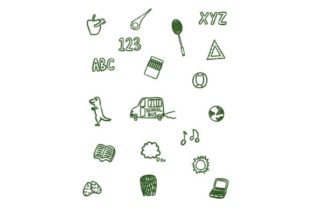
At its core, this resource is a set of vector illustrations and design elements centered on the school and education theme. The package includes a JPEG preview at 300 DPI, which gives you a quick way to browse the collection without opening a dedicated editor. The primary working files are in EPS10 format, and the entire set contains 100 fully resizable vector files. EPS10 is a widely compatible vector format that works across Adobe Illustrator, CorelDRAW, Affinity Designer, and many other vector editing tools. Because the graphics are vector-based, you can scale them to any size without losing resolution, which makes them suitable for both small digital thumbnails and large printed banners.
The fact that Back To School of Vector Design is built for various purposes and printable projects means the same asset can move from screen to paper without degradation. This is not a collection of low-resolution raster images that require upscaling or retouching. Each file is a self-contained vector graphic that can be opened, edited, and exported as needed. For professionals who need to produce multiple deliverables from a single source file, this kind of consistency is valuable.
Where This Resource Fits in a Broader Workflow
Vector resources like this one are most useful when integrated into a repeatable design or content production process. Consider the typical workflow of a small business owner preparing a seasonal marketing campaign. The theme is school-related, perhaps for a back-to-school sale, a newsletter, or a social media series. Without a dedicated design resource, the business owner would need to either hire a designer, create illustrations from scratch, or settle for generic stock imagery that does not fully align with the campaign tone.
Back to School - Clip fits into the asset acquisition phase of that workflow. After defining the campaign message and choosing the platform, the next step is gathering visual components. Opening the EPS10 files and selecting relevant graphics eliminates the need to draw or commission custom illustrations for basic thematic elements. Once selected, the vectors can be colored to match brand guidelines, combined with typography, and exported in whatever format the distribution channel requires.
For educators and curriculum designers, the same resource fits into a different sequence. The planning phase might involve outlining lesson objectives, then identifying visual aids that reinforce key concepts. Pulling a vector illustration of a school bus, a globe, or classroom objects from the collection and placing it into a worksheet or presentation slide is a straightforward integration step. Because the files are fully resizable, the same graphic can serve as a small icon on a quiz paper and as a large visual on a classroom poster.
Before the Project: Preparation and Planning
One of the overlooked advantages of having a vector collection on hand is that it influences the planning stage itself. When you know what visuals are available, you can design your layout and message around them rather than searching for assets after the content is written. Open the JPEG preview file before you start any school-themed project and review the 100 graphics available. Make a short list of elements that match your intended theme. This pre-selection step prevents scope creep, keeps the design direction focused, and reduces the number of revisions later.
If you are working with a team, sharing the preview file allows everyone to agree on visual references before production begins. This is especially useful for freelancers collaborating with clients who have difficulty describing what they want visually. Instead of vague direction like "something with a school feel," you can point to specific graphics in the collection and build consensus.
During the Project: Execution and Adaptation
When you move into the active design phase, the EPS10 files become the core working materials. Open the files in your vector editing software and begin placing elements into your document. Because each file is fully resizable, you can drag a graphic into your artboard and scale it to the exact dimensions needed without quality loss. This is a major time-saver compared to searching for stock photos that need cropping, color correction, or resolution adjustments.
Another practical advantage is the ability to customize color schemes. Most vector files in collections like this are built with editable fills and strokes. You can recolor an entire illustration in seconds to match a brand palette or a specific print requirement. For example, if your project uses a navy blue and orange color scheme, you can select all the objects in a vector file and apply those colors globally. This level of control is difficult to achieve with raster images.
Compatibility is also worth noting here. EPS10 is supported across multiple platforms, so whether you use a Mac or Windows machine, and whether you prefer Adobe tools or an open-source alternative, the files will open correctly. Saving your project as a layered EPS or AI file preserves the editability of the vector elements for future use.
After the Project: Archiving and Reuse
Once a project is complete, the remaining graphics in the collection do not become obsolete. Organize the EPS10 files into a folder on your local drive or cloud storage, tagged with relevant keywords like "school," "education," "clip art," or "vector resources." When a similar project arises months or years later, you can retrieve the same files and adapt them to a new context. This long-term reusability is one of the strongest arguments for investing in a quality vector set.
For publishers who produce seasonal content annually, such as back-to-school guides or educational newsletters, the same 100 vector files can be used year after year. Changing the layout, color palette, and composition keeps the materials feeling fresh while maintaining a consistent visual foundation.
Integrating Back to School - Clip with Other Tools and Methods
Vector resources rarely exist in isolation. They are often combined with typography, photography, brand assets, and layout grids. A solid workflow involves layering these elements in a structured way. Start with a grid or template in your design software, then import the EPS10 graphics as the visual anchors. Add text overlays using your chosen fonts, and optionally incorporate photographic backgrounds or textures. The vector files act as the consistent, high-quality illustration layer that holds the composition together.
If you use project management or asset management platforms like Notion, Trello, or Airtable, you can embed the JPEG preview as a reference within your project brief. Team members can view the available graphics without needing to open a design tool. This integration between your asset library and your workflow platform reduces back-and-forth communication and keeps everyone aligned.
For those who create printable products, such as planners, flashcards, posters, or classroom decorations, the 300 DPI JPEG preview serves an additional purpose. You can use it to create a mockup of your final product before committing to print. Place the preview into a template, test the size and positioning, and confirm that the layout works. Once satisfied, export the final version from the EPS10 file at full resolution. This two-step process prevents wasted paper and ink.
Practical Tips for Getting the Most Out of This Collection
- Organize by theme before you start. The 100 files likely cover a wide range of subjects within the school topic. Group them into subfolders like "transportation," "classroom objects," "people," "symbols," and "backgrounds." This makes retrieval faster during active projects.
- Maintain a master color palette. Before you begin customizing any vector file, define the two to four colors that will appear across your project. Apply these colors consistently to all graphics from the set. This ensures cohesion even when mixing multiple illustrations.
- Use the preview file as a quick reference. Keep the JPEG open in a lightweight viewer while you work. Scanning through the preview is faster than opening each EPS file individually, especially when you are looking for a specific graphic.
- Export in multiple formats at the end. After finalizing your design, export versions in SVG for web use, PDF for print, and PNG for quick sharing. The vector source file remains editable, but these derivatives cover the most common distribution needs.
- Version your files. If you customize a vector file heavily, save a copy with a new name rather than overwriting the original. This preserves the base graphic for future projects that might require a different adaptation.
Consistency and Quality Control Across Deliverables
One of the hidden costs of using different asset sources for a single campaign is visual inconsistency. Photographs from one stock site, vector icons from another, and hand-drawn elements from a third can create a disjointed look. When you have 100 vector files from a single, coherent collection, the style remains uniform across all graphics. This uniformity simplifies quality control because you do not need to adjust contrast, sharpness, or style between different visual elements.
Before sending a project to print or publishing it online, check that all vector graphics have been properly scaled, colored, and positioned. Because the EPS10 files are fully resizable, scaling artifacts are not a concern, but you should verify that the final export resolution matches your output medium. For print, 300 DPI is the standard. For digital display, 72 DPI or 150 DPI may suffice, but exporting from a vector file ensures you can always produce a high-resolution version if needed.
Long-Term Value and Asset Management
A well-organized vector library grows in value over time. The 100 files in Back to School - Clip are not disposable assets meant for a single use. They can be referenced, remixed, and repurposed across multiple projects spanning different years and different audience segments. The key is treating them as part of a larger asset management strategy. Keep them in a dedicated folder with a clear naming convention, back them up to cloud storage, and document any customizations you make so that future iterations remain efficient.
For freelancers and small business owners especially, the ability to produce consistent, high-quality materials without starting from scratch each time is a competitive advantage. Time saved on asset creation is time that can be redirected toward strategy, client communication, or refining the final product.
Back to School - Clip is a focused resource, but its practical value extends far beyond a single season or use case. When integrated into a thoughtful workflow, it becomes a reliable component of your broader creative toolkit. Understanding its format, its capabilities, and its place in the production process allows you to use it with intention rather than as an afterthought. Whether you are preparing a classroom handout, a marketing flyer, or a digital course visual, the combination of 100 resizable vector files and a high-resolution preview gives you both flexibility and control.